Lipoma Removal: What Lipomas Are and How They Can Be Removed with a Minimally Invasive Punch Biopsy Technique
Learn what lipomas are, why they occur, when they should be assessed, and how selected lipomas can be removed using a minimally invasive punch biopsy technique with reduced scarring.
What Are Lipomas?
A lipoma is a common, benign growth made up of mature fat cells. They usually sit just beneath the skin in the subcutaneous tissue and often feel soft, rubbery, smooth, and mobile when touched. Lipomas are not cancerous and, in most cases, are harmless. They can occur anywhere on the body but are commonly found on the neck, shoulders, back, arms, abdomen, and thighs.
Many people notice a lipoma as a slow-growing lump under the skin. Some remain small for years, while others gradually enlarge over time. Most lipomas are painless, but they may become uncomfortable if they press on surrounding nerves, sit in an area of friction, or become cosmetically bothersome.
What Causes Lipomas?
The exact cause of lipomas is not always known. Some people may be more prone to developing them due to genetic factors, and they can sometimes run in families. Lipomas are generally unrelated to body weight, meaning losing weight will not usually make a lipoma disappear.
Although most lipomas are benign, any new, changing, painful, firm, rapidly growing, or deep lump should be assessed by a qualified medical professional to confirm the diagnosis and rule out other causes.
Do Lipomas Need to Be Removed?
Not every lipoma needs treatment. If a lipoma is small, soft, painless, and not changing, your doctor may recommend monitoring it.
Lipoma removal may be considered when the lump is:
- Increasing in size
- Painful or tender
- Catching on clothing or causing irritation
- Pressing on nearby structures
- Cosmetically concerning
- Difficult to confidently diagnose without removal or pathology
Surgical removal is commonly used when treatment is needed. Complete excision of the lipoma and its capsule helps reduce the chance of recurrence.
How Are Lipomas Traditionally Removed?
Traditional lipoma removal usually involves making an incision over the lump, carefully dissecting around it, and removing the lipoma from beneath the skin. The wound is then closed with sutures.
This method is effective, particularly for larger or deeper lipomas, but the incision length may be similar to the size of the lipoma, which can leave a more noticeable scar depending on the area treated.
Minimally Invasive Lipoma Removal Using a Punch Biopsy Technique
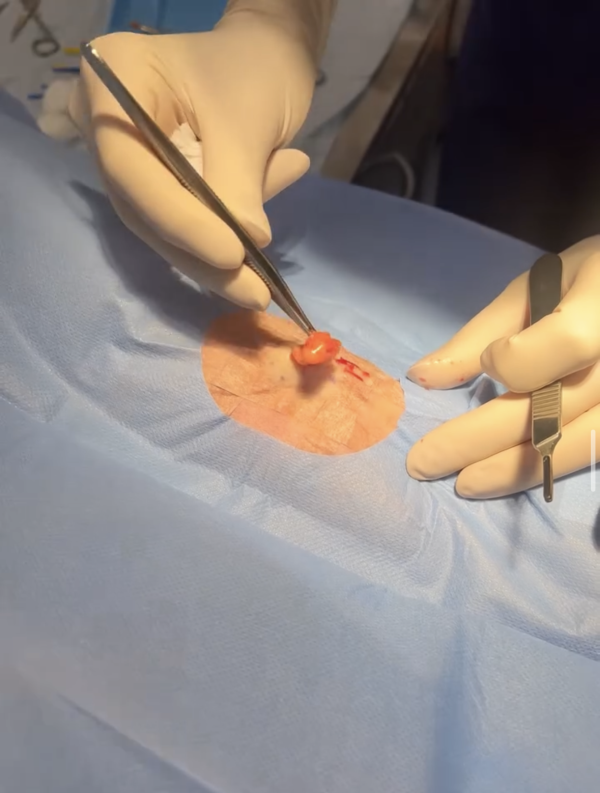
For selected small-to-moderate, superficial lipomas, a minimally invasive punch biopsy technique may be used. This approach allows the practitioner to create a small circular opening in the skin using a sterile punch biopsy tool, rather than making a longer incision.
Through this small opening, the lipoma is carefully loosened and expressed or removed from beneath the skin. The goal is to remove the fatty lump while keeping the skin opening as small as possible.
This technique may be suitable for certain lipomas that are:
- Superficial
- Soft and mobile
- Well-defined
- Not too large
- Located in an area where minimising scarring is important
- Clinically appropriate after medical assessment
It is not suitable for every lipoma. Larger, deep, firm, painful, rapidly growing, or unusual lumps may require imaging, biopsy, or formal surgical excision.
Benefits of Punch Biopsy Lipoma Removal
When appropriate, punch-assisted lipoma removal may offer several cosmetic and practical benefits, including:
Smaller entry point
A punch biopsy creates a small circular opening, which may result in a smaller scar compared with a longer surgical incision.
A punch biopsy creates a small circular opening, which may result in a smaller scar compared with a longer surgical incision.
Minimally invasive approach
The technique is generally performed under local anaesthetic in a clinical setting, meaning the area is numbed while the patient remains awake.
The technique is generally performed under local anaesthetic in a clinical setting, meaning the area is numbed while the patient remains awake.
Reduced downtime
Most patients can return to light daily activities soon after the procedure, depending on the size and location of the lipoma.
Most patients can return to light daily activities soon after the procedure, depending on the size and location of the lipoma.
Pathology confirmation
Once removed, the tissue can be sent for histopathology if clinically indicated, helping confirm that the lump is benign.
Once removed, the tissue can be sent for histopathology if clinically indicated, helping confirm that the lump is benign.
Cosmetically focused removal
For patients who are concerned about visible scarring, a smaller incision technique may be a preferred option when the lipoma is suitable.
For patients who are concerned about visible scarring, a smaller incision technique may be a preferred option when the lipoma is suitable.
What Happens During the Procedure?
The process usually involves:
- Medical assessment
The lump is examined to determine whether it feels consistent with a lipoma and whether punch-assisted removal is appropriate. - Local anaesthetic
The area is cleaned and numbed with local anaesthetic. - Small punch opening
A sterile punch biopsy tool is used to create a small opening in the skin. - Lipoma release and removal
The lipoma is gently loosened from surrounding tissue and removed through the small opening. - Closure and dressing
Depending on the size of the opening, a small suture, skin closure strip, or dressing may be used. - Aftercare
Patients are given wound care instructions to support healing and reduce the risk of infection or scarring.
Will the Lipoma Come Back?
If the lipoma and its capsule are completely removed, recurrence is less likely. However, recurrence can still occur, especially if part of the capsule remains. Techniques that remove only the fatty contents, such as liposuction, may have a higher recurrence risk if the capsule is not fully removed.
When Should You Have a Lump Checked?
You should seek medical assessment if a lump is:
- Rapidly growing
- Painful
- Firm or fixed in place
- Larger than expected
- Deep under the skin
- Returning after previous removal
- Associated with skin changes
- New and unexplained
While lipomas are usually harmless, not every lump is a lipoma. A proper diagnosis is important before removal.
Lipoma Removal in Clinic
Lipomas are common benign fatty lumps that can often be safely removed in a clinical setting. For suitable patients, a minimally invasive punch biopsy lipoma removal technique may provide a smaller entry point, reduced visible scarring, and a straightforward recovery.
If you have a lump that you think may be a lipoma, book a consultation for assessment. Your practitioner can determine whether monitoring, imaging, traditional excision, or minimally invasive punch-assisted removal is the safest and most appropriate option for you.