🌟 Your Acne Treatment Journey: A Modern, Multi‑Modal Approach to Clearer Skin
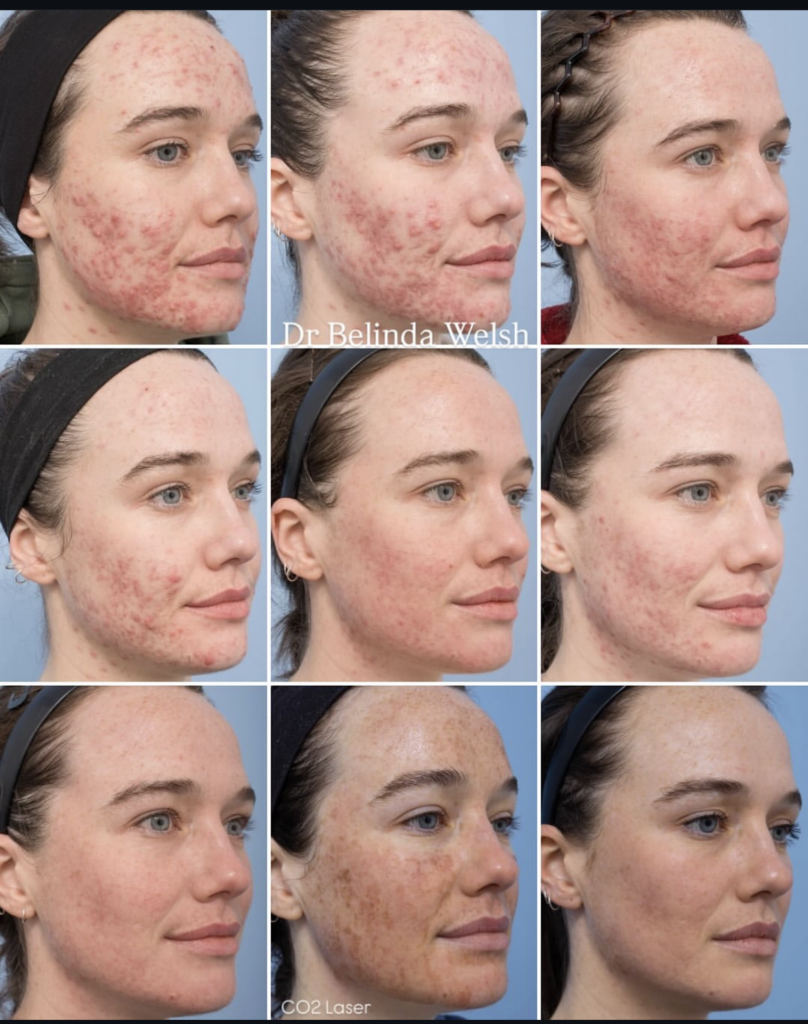
Our patient Journey throughout acne management
Acne isn’t “just pimples”. It’s a complex skin condition driven by several overlapping factors — oil production, clogged pores, bacteria, inflammation, and even your immune system. That’s why many people don’t get results from a single product or treatment.
To truly improve acne and prevent long‑term scarring, we use a layered, multi‑modal treatment plan. Each treatment targets a different part of the acne process, helping you achieve clearer skin faster and more safely.
🔍 Understanding Why Acne Needs More Than One Treatment
Acne develops because of several pathways happening at once:
- Excess oil production
- Blocked pores
- Bacterial activity (Cutibacterium acnes)
- Inflammation and redness
- Changes in the skin’s immune response
Because acne is multi‑factorial, the most effective treatment plans combine different therapies — each addressing a specific pathway.
💥 Step 1: Calming Inflammation
Intralesional Corticosteroid Injection Therapy
When acne becomes painful, swollen, or cystic, inflammation needs to be controlled quickly.
How it helps:
- Reduces redness
- Shrinks large, painful cysts
- Helps prevent early scarring
How it works:
Corticosteroids temporarily reduce immune activity in the skin, calming inflammation rapidly.
When we use it:
- Sudden cystic breakouts
- Nodules that risk scarring
- Severe inflammatory acne
This is a short‑term tool, not a long‑term solution — but it can be a game‑changer during flare‑ups.
🌙 Step 2: Long‑Term Disease Control
Oral Isotretinoin
For moderate to severe acne, or acne that keeps returning, isotretinoin is the only treatment proven to create long‑lasting remission.
What it does:
- Shrinks oil glands
- Normalises skin cell turnover
- Reduces acne‑causing bacteria
- Calms inflammation
Why it matters:
- Can prevent future scarring
- Changes the long‑term course of acne
- Offers the highest chance of permanent improvement
Because it’s powerful, it requires monitoring — but for many patients, it’s life‑changing.
🔴 Step 3: Reducing Redness & Inflammation
Vascular Laser (VBeam)
The VBeam pulsed‑dye laser targets the vascular component of acne — the redness and inflammation that often linger even after breakouts settle.
Benefits:
- Reduces persistent redness
- Calms active inflammatory lesions
- May reduce the frequency of flares
Best for:
- Active inflammatory acne
- Post‑inflammatory erythema (PIE)
- Patients with sensitive, redness‑prone skin
✨ Step 4: Treating Acne Scarring
Fractional CO₂ Laser
Once active acne is under control, we shift focus to repairing the skin.
The CO₂ laser is one of the most effective treatments for acne scarring.
How it works:
- Creates controlled micro‑injuries
- Stimulates collagen remodelling
- Rebuilds smoother, healthier skin
Results:
- Reduced scar depth
- Improved texture
- More even, refined skin quality
Important:
CO₂ laser treats the after‑effects of acne — so active breakouts must be stabilised first.
🧩 Why a Multi‑Modal Approach Works Best
Each treatment targets a different part of the acne process:
| Acne Pathway | Treatment |
|---|---|
| Sebum (oil) overproduction | Isotretinoin |
| Inflammation | Corticosteroids, VBeam |
| Follicular blockage | Isotretinoin |
| Vascular redness | VBeam |
| Scarring | CO₂ Laser |
A combined approach allows us to:
- Control active acne
- Prevent long‑term scarring
- Improve skin texture
- Support long‑term remission
- Build confidence through clearer, healthier skin
🌟 Final Thoughts: Clear Skin Comes From the Right Combination
There is no single “miracle cure” for acne — but there is a strategy that works.
A structured, personalised, multi‑modal plan allows us to:
- Treat acne at every level
- Reduce inflammation and redness
- Prevent permanent scarring
- Restore smooth, healthy skin
- Support long‑term remission