Why Does One Hand Look More Sun Damaged Than the Other After Years of Golf?
For many golfers, the difference between their gloved hand and non-gloved hand can be surprisingly obvious. The hand protected by a golf glove may appear smoother, more even in colour and less weathered, while the non-gloved hand can show more visible signs of sun damage, including pigmentation, skin crepiness, rough texture, thinning skin and age spots.
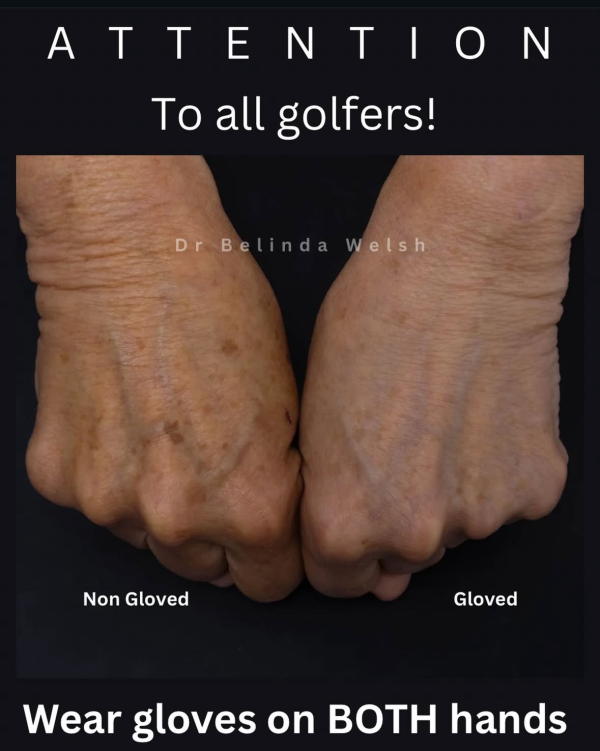
This is a classic example of chronic, uneven ultraviolet exposure. Over many years of playing golf outdoors, the non-gloved hand receives significantly more direct UV exposure than the hand covered by a glove. Golf is played for long periods in daylight, often during high UV times, and research has shown that golfers can have higher levels of cumulative UV exposure and increased skin cancer risk compared with the general population.
Why Golf Causes So Much Sun Exposure
Golf is a high-risk sport for sun damage because players are often outdoors for several hours at a time. Unlike a short walk or quick outdoor activity, a round of golf may involve prolonged exposure to direct sunlight, reflected UV from grass, sand and concrete paths, and repeated exposure week after week.
Even when the weather feels mild or cloudy, ultraviolet radiation can still affect the skin. UV exposure contributes to premature skin ageing, pigmentation, wrinkles, sagging and skin cancer risk.
For golfers, the hands are especially vulnerable because they are almost always exposed. The face, neck and arms often get more attention with sunscreen, hats and clothing, but the hands are commonly forgotten.
Why the Non-Gloved Hand Looks Older
The difference between a gloved and non-gloved hand occurs because the glove acts as a physical barrier. The covered hand receives less UV exposure, while the uncovered hand is repeatedly exposed to sunlight.
Over time, this can lead to visible changes such as:
1. Crepey skin
UV radiation contributes to the breakdown of collagen and elastin, which are the support structures that keep skin firm, smooth and elastic. As these fibres weaken, the skin can begin to look thin, crinkled or crepey.
UV radiation contributes to the breakdown of collagen and elastin, which are the support structures that keep skin firm, smooth and elastic. As these fibres weaken, the skin can begin to look thin, crinkled or crepey.
2. Pigmentation and sun spots
Repeated sun exposure stimulates melanocytes, the pigment-producing cells in the skin. This can lead to uneven brown patches, freckles, solar lentigines and general mottled pigmentation.
Repeated sun exposure stimulates melanocytes, the pigment-producing cells in the skin. This can lead to uneven brown patches, freckles, solar lentigines and general mottled pigmentation.
3. Rough texture
Chronically sun-exposed skin may become dry, rough or leathery in texture. This is part of a process called photoageing, which refers to premature skin ageing caused by UV exposure.
Chronically sun-exposed skin may become dry, rough or leathery in texture. This is part of a process called photoageing, which refers to premature skin ageing caused by UV exposure.
4. Thinning and fragility
The skin on the backs of the hands is already naturally thin. When repeatedly exposed to UV radiation, it can become even more fragile, making veins, tendons and texture changes more visible.
The skin on the backs of the hands is already naturally thin. When repeatedly exposed to UV radiation, it can become even more fragile, making veins, tendons and texture changes more visible.
5. Precancerous and cancerous skin changes
Long-term UV exposure increases the risk of actinic keratoses, squamous cell carcinoma, basal cell carcinoma and melanoma. Golfers should be particularly mindful of new, changing, scaly, bleeding or non-healing spots on the hands. Sun protection reduces the risk of sunburn, premature skin ageing and skin cancer.
Long-term UV exposure increases the risk of actinic keratoses, squamous cell carcinoma, basal cell carcinoma and melanoma. Golfers should be particularly mindful of new, changing, scaly, bleeding or non-healing spots on the hands. Sun protection reduces the risk of sunburn, premature skin ageing and skin cancer.
The Glove Shows What Protection Can Do
The gloved hand often tells an important story. It shows how much protection even a simple physical barrier can provide when worn consistently over time.
While a golf glove is not a medical sun-protective garment, it still reduces direct sunlight reaching the skin beneath it. This is why the gloved hand may have:
- Less pigmentation
- Smoother texture
- Less crepiness
- Fewer visible sun spots
- More even skin tone
In contrast, the non-gloved hand may reveal the true effect of years of unprotected UV exposure.
Why Sunscreen on the Hands Often Fails
Many people apply sunscreen before golf but still develop sun damage on their hands. This is usually because sunscreen on the hands wears off quickly.
During golf, sunscreen may be removed by:
- Sweating
- Washing hands
- Rubbing the grip
- Handling tees, balls and towels
- Repeated friction from the club
- Not reapplying during the round
For extended outdoor activity, broad-spectrum, water-resistant sunscreen should be reapplied regularly, especially after sweating or rubbing. It is recommended that SPF 50 or higher for extended outdoor activity, with reapplication every two hours or after sweating or swimming.
How Golfers Can Protect Their Hands From Sun Damage
The best treatment for sun damage is prevention. For golfers, hand protection should become part of the same routine as wearing a hat or applying sunscreen to the face.
Practical tips include:
- Apply broad-spectrum SPF 50+ to both hands before playing
- Reapply sunscreen to the non-gloved hand every 2 hours
- Consider wearing a UV-protective glove or sun sleeve on the non-gloved side
- Avoid peak UV times where possible
- Keep sunscreen in the golf bag
- Pay attention to the backs of the hands, fingers and wrists
- Have regular skin checks, especially if you golf frequently
Broad-spectrum sunscreen is important because it protects against both UVA and UVB rays. UVA is strongly associated with premature ageing and pigmentation, while UVB contributes to sunburn and skin cancer risk.
Can Sun-Damaged Hands Be Treated?
Yes. While prevention is essential, several in-clinic treatments can help improve the appearance of sun-damaged hands depending on the type and severity of the damage.
Treatment options may include:
Laser treatments
Lasers can target pigmentation, redness, uneven tone and texture. Different devices may be used depending on whether the concern is brown pigmentation, vascular change or skin texture.
Lasers can target pigmentation, redness, uneven tone and texture. Different devices may be used depending on whether the concern is brown pigmentation, vascular change or skin texture.
CO2 laser resurfacing
CO2 laser may help improve skin texture, crepiness and overall sun-damaged skin quality by stimulating collagen remodelling.
CO2 laser may help improve skin texture, crepiness and overall sun-damaged skin quality by stimulating collagen remodelling.
Pigment-focused treatments
For sun spots and pigmentation, options may include laser, IPL or medical-grade topical therapy.
For sun spots and pigmentation, options may include laser, IPL or medical-grade topical therapy.
Prescription skincare
Medical-grade skincare may help support skin turnover, pigmentation control and collagen stimulation.
Medical-grade skincare may help support skin turnover, pigmentation control and collagen stimulation.
Skin checks before cosmetic treatment
Any suspicious, changing, scaly, bleeding or non-healing lesion should be medically assessed before cosmetic laser or skin treatments are considered.
Any suspicious, changing, scaly, bleeding or non-healing lesion should be medically assessed before cosmetic laser or skin treatments are considered.
The Takeaway
The difference between a gloved and non-gloved hand in golfers is a powerful visual reminder of how cumulative sun exposure affects the skin. The glove provides partial protection, while the uncovered hand often develops more obvious signs of photoageing, including crepey skin, pigmentation, rough texture and sun spots.
For regular golfers, protecting the hands is just as important as protecting the face. Daily SPF, reapplication, UV-protective gloves and regular skin checks can make a significant difference to long-term skin health.
Concerned about sun damage on your hands?
Book a skin consultation to assess pigmentation, texture changes and sun damage, and to discuss suitable treatment options for healthier-looking hands
Book a skin consultation to assess pigmentation, texture changes and sun damage, and to discuss suitable treatment options for healthier-looking hands