Pigmentation changes—whether dark (hyperpigmentation) or light (hypopigmentation)—are one of the most common reasons people seek dermatological care. Many patients come to me concerned about “melasma” or “stubborn pigmentation” especially on the face.
But here’s something crucial to understand: not all pigmentation is what it seems. One under-recognised cause of facial pigmentation changes is inflammation—often from conditions like eczema (atopic dermatitis). Inflammatory skin diseases can trigger both hyperpigmentation and hypopigmentation, and this is especially common (and often more noticeable) in people with skin of color.
How Does Inflammation Cause Pigmentation Changes?
When the skin becomes inflamed—whether due to eczema, contact dermatitis, or even
acne—it sends distress signals that can disrupt the normal activity of melanocytes (the
cells that produce pigment). This can result in:
- Post-Inflammatory Hyperpigmentation (PIH): Dark patches where the skin has healed.
- Post-Inflammatory Hypopigmentation: Lighter areas caused by a temporary loss of pigment.
This process is completely different from melasma, which is a hormonally influenced condition and usually doesn’t involve inflammation.
Why Correct Diagnosis is Critical
Treating pigmentation without understanding the root cause can lead to frustration—or worse, make the problem worse. For instance, melasma treatments (like pigment lasers or bleaching creams) might irritate eczema-prone skin, flaring inflammation and worsening pigmentation.
That’s why an expert assessment is so important. For patients with inflammatory causes of pigmentation, calming the inflammation (for example, with targeted medications like dupilumab for eczema) is the key to long-term skin clarity.
Common Causes of Facial Pigmentation
When assessing facial pigmentation, dermatologists consider a range of possible causes, including:
- Melasma: Symmetrical brown patches, often linked to hormones and sun exposure.
- Post-Inflammatory Hyperpigmentation (PIH): Follows acne, eczema, or other skin injuries
- Eczema (Atopic Dermatitis): May cause both hyper- and hypopigmentation, often overlooked.
- Lichen Simplex Chronicus: Thickened, darkened patches from chronic scratching.
- Drug-induced Pigmentation: Certain medications can cause facial pigment changes.
- Vitiligo: Sharp, depigmented patches that may be mistaken for other causes.
- Sun damage: Chronic sun damage can cause
- Hori’s naevus: A type of aquired patchy hyperpigmentation on the cheeks especially in people of Asian heritage
Special Considerations for Skin of Colour
People with medium to dark skin tones are more prone to pigmentation changes after inflammation. This makes it even more important to identify underlying causes like eczema, as mistreatment can have a lasting impact.
The Takeaway
If you’re struggling with pigmentation changes—especially if they’ve appeared after inflammation, itching, or irritation—getting an accurate diagnosis is crucial. At Complete Skin Specialists, we focus on expert diagnosis and tailored treatment plans to address the root cause of your skin concerns. Healthy skin starts with the right diagnosis.
Disclaimer: This blog post is for informational purposes only and is not a substitute for medical advice. Always seek personalised care from a qualified dermatologist.
Patient Case Study: When It Wasn’t Melasma After All
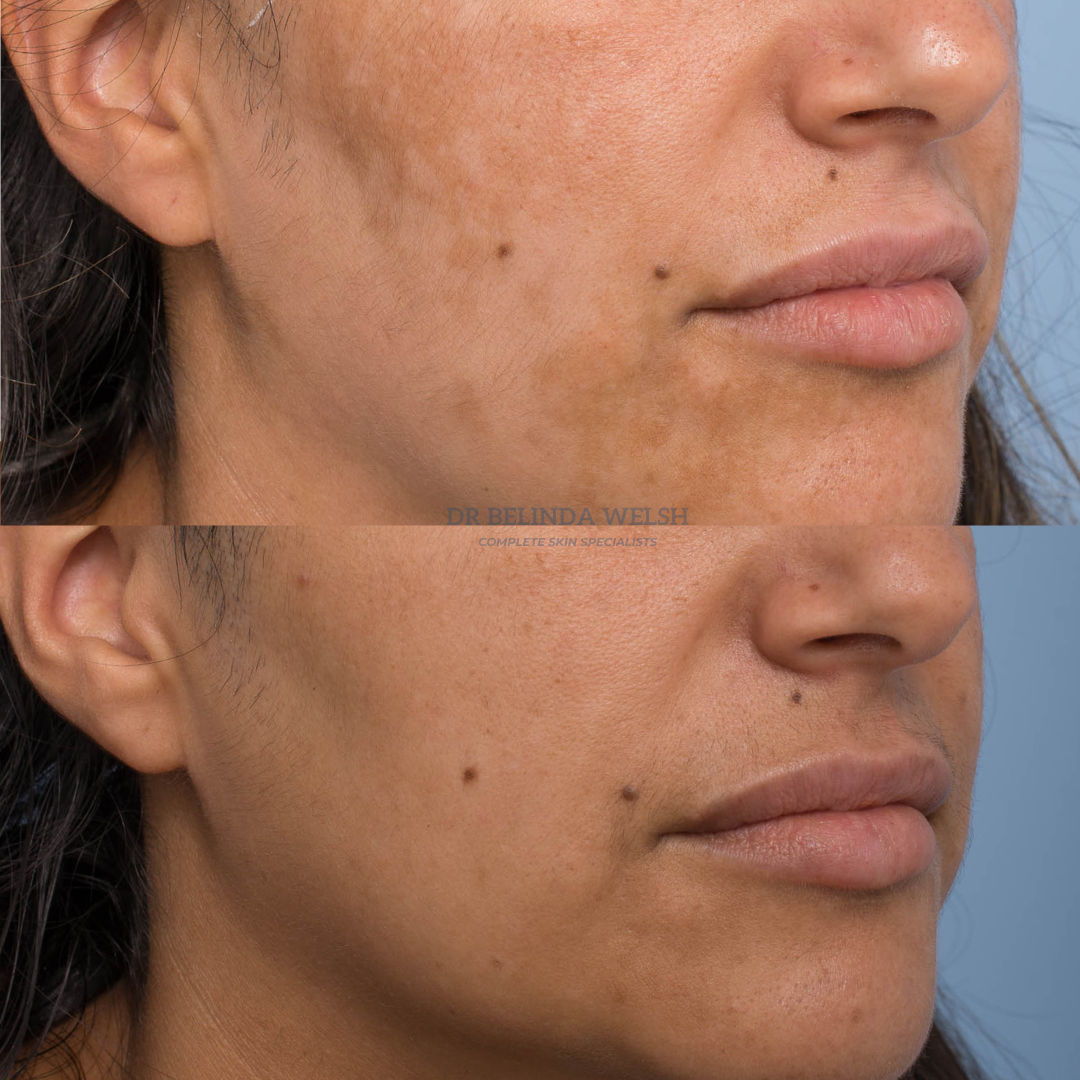
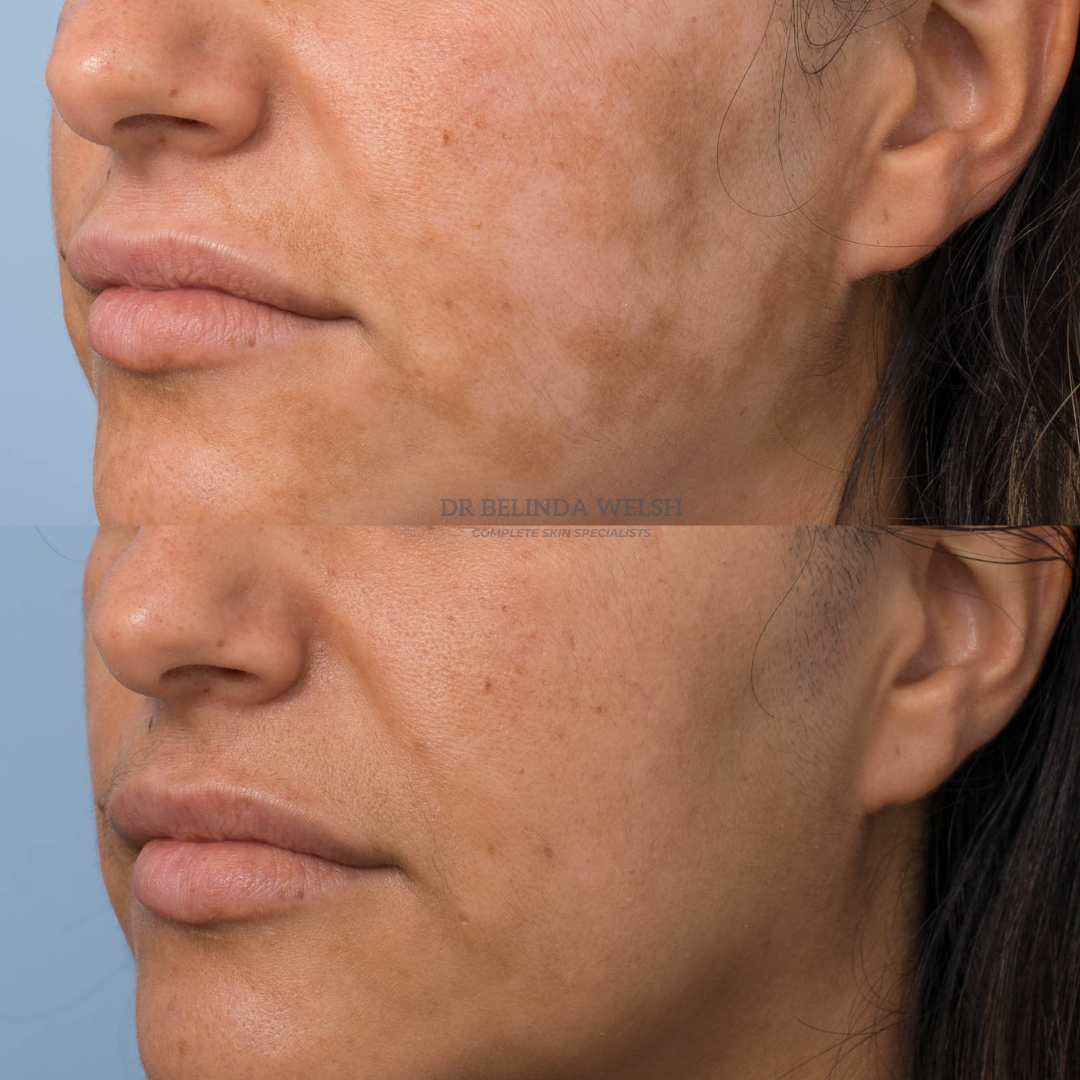
A 38-year-old woman came to my clinic concerned about persistent pigmentation on both sides of her face. She had been previously diagnosed with melasma and had tried various creams and treatments—with little success.
What I found:
On close examination, her skin showed both dark (hyperpigmented) and light (hypopigmented) areas, along with subtle signs of underlying eczema (atopic dermatitis). This pattern was not typical of melasma, which usually presents as uniform brown patches. After taking a thorough history and examination it was clear she actually had atopic dermatitis (eczema)
The diagnosis:
Instead of melasma, the root cause of her pigmentation was post-inflammatory changes from eczema. This meant that her pigmentation was secondary to chronic skin inflammation, not a primary pigment disorder.
Treatment:
I initiated targeted treatment to calm her skin inflammation, using dupilumab—a biologic medicine approved for moderate to severe eczema.
The result:
Over 3 months, her facial pigmentation significantly improved as the eczema was brought under control. The combination of treating the inflammation and supporting her skin barrier restored much of her natural skin tone.
(You can see her before-and-after photos below, shared with full patient consent.)
Key Lesson:
Not all pigmentation is melasma! This case highlights the importance of a thorough dermatological assessment to pinpoint the true cause of skin changes—especially in people with skin of colour, where eczema may present more subtly but still trigger significant pigment disruption.