Accidental injuries can leave behind more than just scars — they can cause traumatic tattoos, a form of permanent skin discolouration caused by embedded debris. Fortunately, modern laser dermatology techniques, especially CO₂ laser treatment, offer a highly effective solution to remove these stubborn marks.
In this post, we’ll explain what traumatic tattoos are, how they occur, the different types, and the best laser treatment options available.
What Is a Traumatic Tattoo?
A traumatic tattoo is a type of skin pigmentation that occurs when pigmented material becomes embedded in the skin due to injury. This is different from an ink tattoo — traumatic tattoos are unintentional and can be emotionally distressing or cosmetically concerning.
Common causes of traumatic tattoos include:
- Road accidents involving gravel or asphalt
- Falls while running or cycling
- Fireworks or gunpowder blasts
- Pencil-tip injuries (often in children)
- Industrial accidents or explosions
The result is often a dark blue, black, or grey patch that resembles a tattoo and does not fade over time.
Types of Traumatic Tattoos
Understanding the type of traumatic tattoo helps determine the best treatment:
1. Gravel Tattoos
These occur when small stones or asphalt particles embed in the skin after a fall or road accident. Often seen on the face, elbows, or knees, they appear dark and textured.
2. Pencil Lead Tattoos
Common in school-age children and teens, this happens when the tip of a pencil accidentally punctures the skin, leaving a bluish-grey mark.
3. Gunpowder Tattoos
Injuries from fireworks or firearms can force black powder into the skin, leaving small black dot-like tattoos.
4. Blast or Burn Debris Tattoos
High-energy trauma like industrial explosions may drive pigment or metal particles into the skin, resulting in deep, irregular pigmentation.
Why Are Traumatic Tattoos Permanent?
Unlike surface wounds, the pigment in traumatic tattoos is often lodged deep in the dermis— the same layer targeted in medical tattooing. This makes it resistant to fading creams, exfoliation, or time. For permanent removal, laser treatment is the most effective solution.
Best Laser Treatments for Traumatic Tattoo Removal
CO2 Laser Treatment for Traumatic Tattoos
The CO2 laser (carbon dioxide laser) is one of the most effective tools for removing embedded debris in the skin. It works by ablating (vaporizing) thin layers of skin with high precision.
Benefits of CO2 laser for traumatic tattoos:
- Precisely targets the pigment-containing skin layers
- Can remove gravel, asphalt, and other debris in a single session
- Stimulates natural skin healing and regeneration
- Minimal risk of scarring when performed by an experienced dermatologist
Real Case Example:
A female patient presented with a dark patch on her right upper cheek after a fall that left gravel embedded under the skin. It resembled a dark tattoo. With just one session of CO2 laser treatment, the embedded debris was completely removed, restoring her natural skin appearance.
Q-Switched Laser Treatment
Q-switched lasers, such as Nd:YAG lasers, are commonly used for ink tattoo removal but can also treat some traumatic tattoos — especially those caused by pencil lead or carbon- based particles. They work by breaking pigment into small particles that the body gradually removes.
Multiple sessions may be required, and results vary depending on pigment type and depth.
Is Laser Treatment Safe?
Yes — when performed by a qualified dermatologist with laser expertise, these treatments are both safe and effective. Local anesthetic or numbing cream ensures comfort, and recovery is typically quick.
Aftercare tips:
- Keep the treated area clean and moisturized
- Avoid sun exposure during healing
- Use sunscreen to prevent pigmentation changes
Conclusion: Clear Skin Is Possible After Injury
Traumatic tattoos may be accidental, but they don’t have to be permanent. CO2 laser treatment offers a powerful solution for patients looking to remove embedded debris and restore clear, even-toned skin — often in a single session.
If you have a traumatic tattoo or pigmented scar from an accident, our clinic offers personalised laser treatment plans tailored to your skin type and needs.
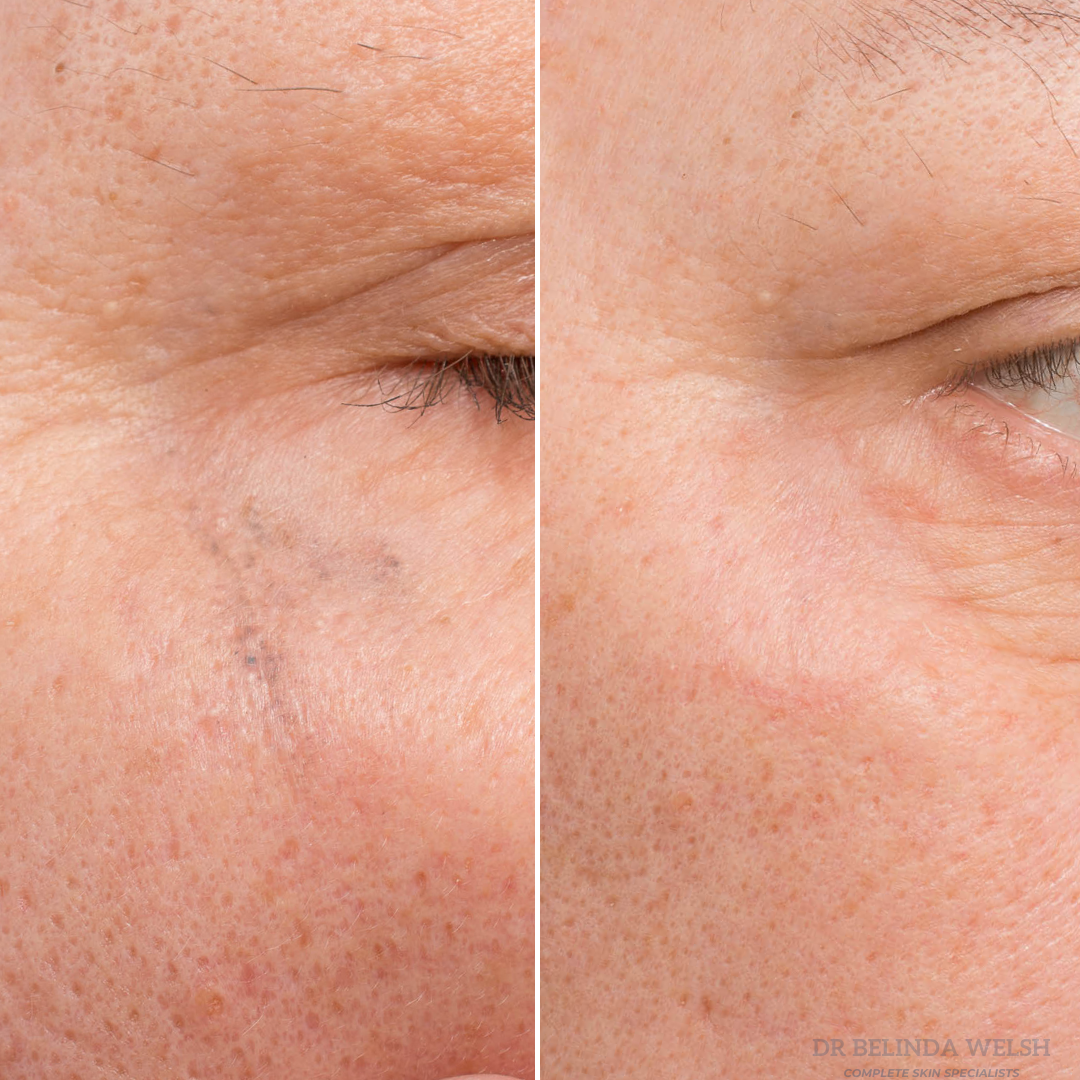
Actual patient of Dr Welsh with a gravel tattoo sustained after a fall. Treated with one session of fractional CO2 laser